Can you learn a language in 10 minutes a day?
LANGUAGE LEARNING
There is a broad spectrum of language learning advice available online - probably too much to be useful. Blog articles, particularly those from language learning apps, often encourage users to study for a very short period consistently in order to see results.
In the article How To Learn A Language In 10 Minutes Per Day, language learning company Babbel says:
"We sat down with one of our linguistics experts here at Babbel to find out why our app gets you speaking a new language in only 10 minutes of study per day."
Another article The Science of Microlearning: How to Learn a Language in Just 10 Minutes a Day by a self-titled polyglot states:
"Ten minutes a day changed my language-learning life."
A professional linguist, a language learning enthusiast, and many others online recommend that studying for very short periods daily will enable you to become fluent in a language. Unfortunately, as with many things in life, if it seems too good to be true, it's probably just someone trying to sell you something.
How long does it take to become fluent?
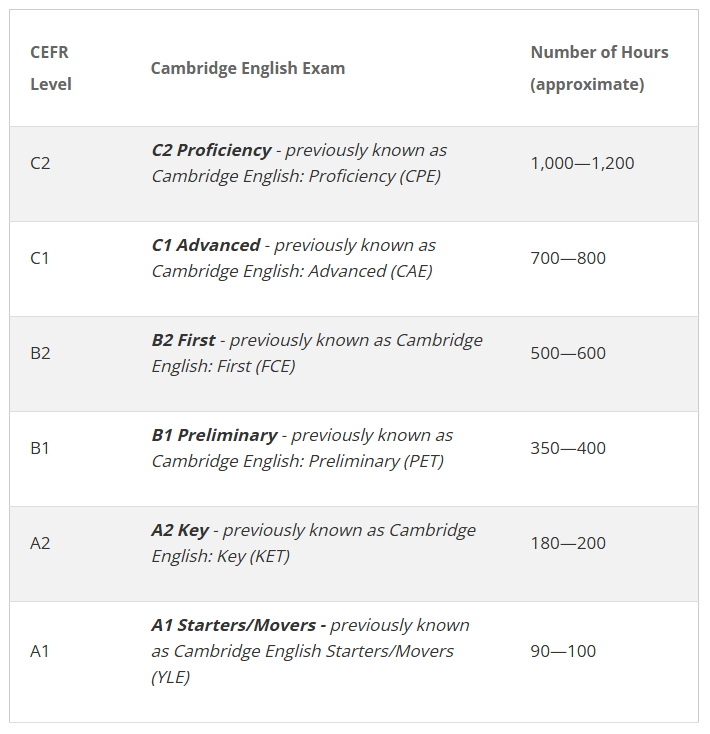
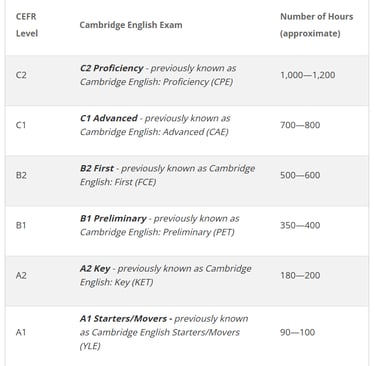
The time it takes to learn a language varies depending on the difficulty of the language, its closeness to a language you already know, and your definition of "learn a language".
Cambridge generally recommends 1,000 - 1,200 hours of study to reach the highest level of English fluency graded on the CEFR scale.
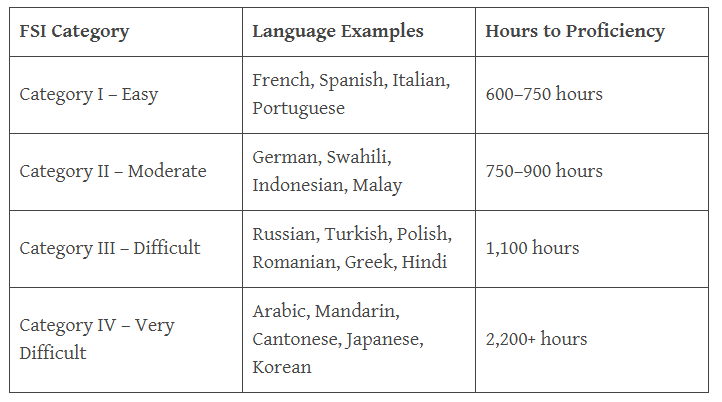
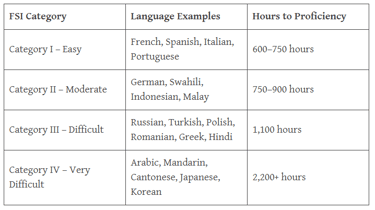
The table below categorizes languages based on their difficulty for English speakers, and provides an approximate time required to reach "proficiency" in that language.
With the exception of the most difficult languages, most students can reach advanced proficiency in approximately 1,000 hours.
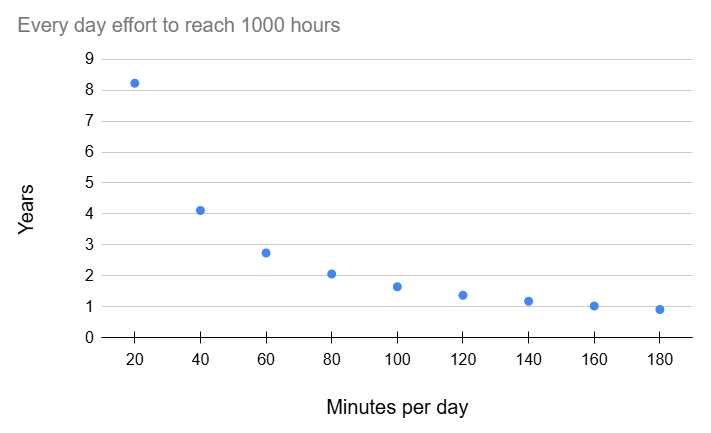
How long does 1,000 hours take?
Now we reach the core problem with the claim that 5, 10, or 20 minutes of study per day will make you fluent in a language:
By studying for 5 minutes a day, you will reach advanced proficiency in a language in approximately 32 years.
By studying for 5 minutes per day you will reach 1,000 hours in 32 years
By studying for 10 minutes per day you will reach 1,000 hours in 16 years
By studying for 20 minutes per day you will reach 1,000 hours in 8 years
The following chart shows how many years it will take to reach 1,000 hours of study based on how long you spend per day.
There are no quick fixes
One thing to note about those promoting "10 minutes per day" is that they usually mean well. They want people to form language learning habits, and they often say "5 minutes is better than nothing" - which is, of course, true but leaves out a lot of context. If you want to become fluent within the next two decades, you'll need to invest more time.
Unfortunately, there are no shortcuts for language learning. It simply takes time. If your goal is to learn the basics, then a few minutes per day is enough. But if fluency is your goal, then a more serious time investment is needed.